Bookshelf Decor Objects: What to Display Besides Books
A guide to the seven families of bookshelf objects, the job each one does, and how to choose them by size, material and color using what you already own.
Books give a shelf its rhythm, but objects give it shape. A bookcase holding nothing but spines can look like a wall of stripes, and one crowded with ornaments looks like a shelf of souvenirs. The middle ground is a small number of pieces, each doing a clear job.
Good bookshelf decor is less about finding special things and more about knowing what each kind of object contributes. There are seven useful families, and most homes already contain something from every one of them.
The seven object families and what each one does
Vessels: shape
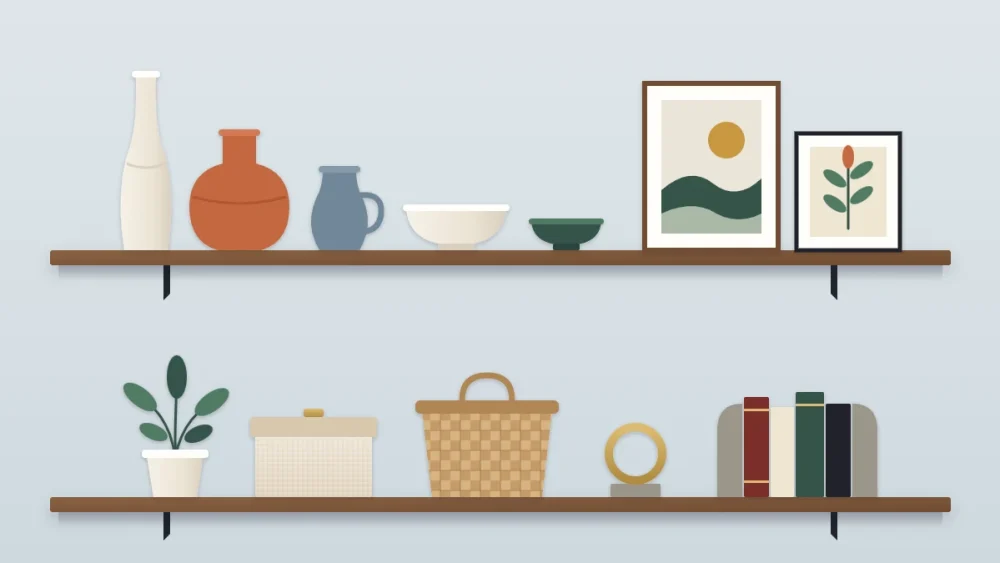
Vases, jugs, bottles and bowls bring curves to a piece of furniture made entirely of straight lines. A tall vase lifts the eye; a wide bowl sits low and steadies a stack of books. They look complete when empty, so they need no upkeep. Placement is covered in the guide to styling vases and bowls on shelves.
Frames and small art: a backdrop
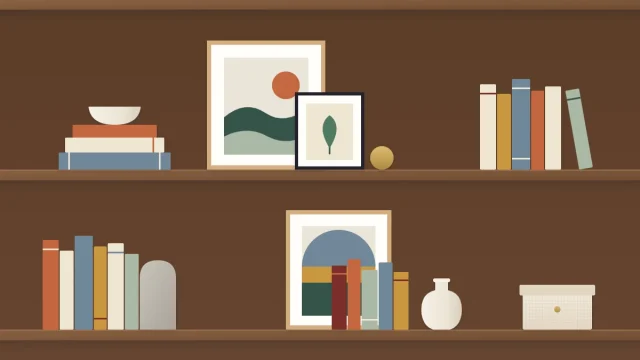
A frame is nearly flat, so it adds color and pattern while using almost no depth. Leaned at the back of a shelf it becomes a background for whatever stands in front. See frames and art on bookshelves for sizes and how to lean them.
Plants and branches: life
Leaves are the only irregular, moving line on a bookcase, which is why one plant changes a whole unit. A trailing plant softens an edge and branches in a vase add height. Every pot needs a saucer or a cachepot so water never reaches books, and the guide to plants on bookshelves helps match a plant to the light a shelf gets.
Boxes and baskets: hiding
Lidded boxes and baskets are the practical family. They hold cables, remotes and paperwork while showing a simple block of wood, card or woven fiber. Use them on lower shelves, where their solid shapes look settled.
Sculptural pieces and found objects: character
This is the personal layer: a carved figure, a piece of driftwood, a stone, an old tool, a collection. These tell a visitor whose shelves they are. They are also the easiest to overdo, so choose a few and group them; the article on displaying collectibles on shelves shows how to keep a collection looking like a display.
Bookends: function
A bookend holds a row upright, but stone, metal or wood bookends are also objects with shape and material of their own. Because they are working pieces, they never look fussy.
A small lamp: glow
A little lamp on a shelf adds warm light at an unexpected height and makes a bookcase the feature of a room in the evening. Choose a plug-in lamp if an outlet is nearby, or a rechargeable or battery one where a cord would trail.
Good to know
Keep shelf lighting to plug-in, battery or rechargeable lamps, and give a lamp enough clear space around the shade. Lighting built into a bookcase or connected to the home’s wiring is a job for a licensed electrician.
Choose by size: large, medium and small
Size matters more than style. Sort your objects into three classes:
- Large: fills about two-thirds of the height of the shelf opening.
- Medium: reaches roughly a third to half of the opening.
- Small: fits in the palm of your hand.
These are loose guides for telling the classes apart, not measurements to check. A shelf looks best with a mix, and three size classes on one shelf is the most it needs: one large, one or two medium, one small. Many shelves are better with fewer.
The usual shortage is at the large end. Small ornaments are easy to collect, so most homes own many, while large pieces are few. If your shelves look fussy, the fix is often to remove several small things and add one big one.
Choose by material
Five materials cover nearly everything that suits a bookcase, and each has a different surface:
| Material | What it adds | Pairs well with |
|---|---|---|
| Ceramic | Matte, soft, solid color | Wood and woven pieces |
| Wood | Warmth and visible grain | Ceramic and metal |
| Glass | Lightness, lets the shelf show through | Dark books and metal |
| Metal | A small bright accent | Wood and glass |
| Woven | Texture and a relaxed feel | Ceramic and plants |
Aim for two or three materials per shelf and repeat each one somewhere else on the unit. A single brass object looks like an accident; three brass touches on different shelves look planned.
Keep to a limited color story
Book spines already supply plenty of color, so objects should calm things down. Pick two neutrals, such as white and natural wood, plus one accent color, and let every object fall into one of those three.
The accent can be quiet. Three pieces in the same soft green or rust tone, spread across the bookcase, are enough to tie it together. Anything that fights the scheme can live in another room.
Shop your home first
Before buying anything, walk through the house with an empty basket. Likely candidates are hiding in plain sight:
- serving bowls, jugs and a good-looking pitcher from the kitchen;
- frames from a hallway or a drawer;
- baskets and boxes from closets;
- a plant that could do with a brighter spot;
- keepsakes that have been stored instead of shown.
Lay everything out, sort it by size, and only then decide what is missing. Often it is a single large vessel, which is a far shorter shopping list than starting from scratch.
Frequently asked questions
What can I put on a bookshelf besides books?
Vases, jugs and bowls, leaning frames, a plant or branches, lidded boxes and baskets, sculptural or found objects, bookends and a small lamp. Choose a few from different families so each one does a separate job, such as adding shape, hiding clutter or bringing in something living.
How many decorative objects should go on one shelf?
Usually one to four, depending on the width of the shelf and how many books share it. A useful limit is three size classes per shelf: one large piece, one or two medium and one small. If a shelf looks fussy, take away small items first.
Do bookshelf objects need to match?
No, but they should relate. Keeping to two or three materials and a small color scheme, such as two neutrals and one accent, lets very different objects sit together comfortably. Repeating a color or material on several shelves ties the whole bookcase together.