Stacking Books Horizontally: When and How to Use Book Stacks
How to use flat book stacks on a shelf: how many books to stack, which goes at the bottom, where stacks belong on the unit and what to put on top.
At a glance
- Difficulty
- Easy
- Time
- About 20 to 30 minutes
- Best for
- Shelves that look flat or lined up
- Shelf type
- Freestanding bookcases, built-ins and low units
What you need
- Your books, including a few large ones
- A shallow bowl
- A small plant with a saucer
- One paperweight-style object
A shelf of upright spines is tidy, and after two or three shelves of it, a little monotonous. Stacking books horizontally is the simplest way to interrupt that pattern: you turn a few books on their sides and the whole shelf gains a change of direction, a step in height and a small platform to style.
The trick is restraint. A stack works because it is the exception among upright rows, so the questions are how many books, where the stack goes and what, if anything, sits on top.
What a flat stack does for a shelf
A stack earns its place by doing one of three jobs. Decide which one you need before you build it.
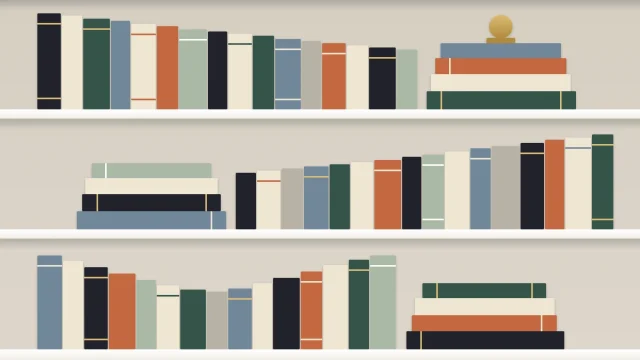
- It breaks the rhythm. Horizontal lines among vertical ones give the eye a rest and stop a long row from reading as a barcode.
- It makes a pedestal. A low object that would be lost on the bare shelf gains presence when it is lifted a few inches.
- It holds a row. Placed at the end of upright books, a stack does the work of a bookend. If you prefer a dedicated piece for that job, see the guide to styling bookends.

How to build a stack, step by step
- Choose three to five books. That range is a loose starting point. Two can look like books left lying about; more than five starts to look like storage.
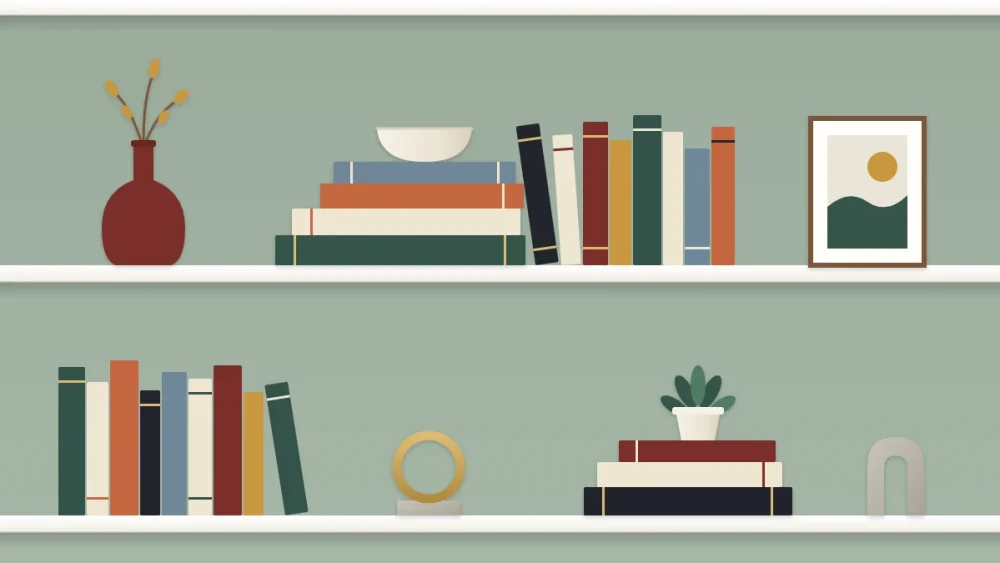
- Put the largest at the bottom. Grade the sizes so each book is the same size as, or smaller than, the one beneath. A stack that steps inward as it rises looks settled.
- Face the spines out. You should still be able to see what each book is. Turn them all the same way so the lettering reads in one direction.
- Line up the spines roughly. Bring the spine edges to the same line at the front and let the differences in size show at the back and sides. It does not need to be exact.
- Check the height. The finished stack, plus anything on top, should leave clear air beneath the shelf above. About two-thirds of the opening is a comfortable upper limit.
- Pick related colors. Spines in one color family make the stack read as a single block. A wildly mixed stack looks like a pile.
Tip
Stack the books you reach for least often. Large illustrated books and cookbooks you use for reference are good candidates; the paperback you are halfway through is not.
Where stacks go on the unit
Placement matters more than the stack itself. Use these as starting points:
- Alternate sides. If a stack sits on the left of one shelf, put the next on the right of the shelf below, so they zigzag down the unit.
- Never one directly above another. Stacks lined up in a column create a stripe that pulls the unit off balance.
- One per shelf at most. Some shelves should have none. On a five-shelf bookcase, two or three stacks in total is plenty.
- Beside a row or alone. A stack can lean against upright books or sit by itself with open shelf on both sides.
For how stacks fit with the rest of the books on the unit, the guide on arranging books in rows, stacks and mixes covers the overall pattern.
What to put on top
One object, and keep it low. The stack is already adding height, so something tall on top usually ends up crowding the shelf above.
| On top | Why it works | Watch for |
|---|---|---|
| A shallow bowl | Wide and low, it echoes the flat lines of the stack | Keep it smaller than the top book |
| A small plant | Soft leaves against hard edges | A saucer or cachepot, so water never reaches the books |
| A paperweight-style piece | A single solid shape gives the stack a full stop | Anything with a rough base that could mark a cover |
| Nothing | The stack itself is the shape | Works best when the top cover is attractive |
Leave the top bare when the shelf already has two or three objects, when the stack is acting as a bookend, or when the top book has a cover you like. An unadorned stack next to empty shelf is one of the calmest things you can do. If you need ideas for the object itself, see what to display besides books.
Stacks beyond the shelf
On a coffee table
Here the stack is seen from above, so the top cover matters more than the spines. Two or three large books are enough. Set them off-center, leave most of the table clear, and top them with one low object or nothing at all.
On top of a low bookcase
The top of a waist-high unit is a display surface in its own right. A stack of three books beside a lamp or a vase gives that pairing a third, lower element and ties the top to the shelves beneath. Keep the stack toward one end.
Keep stacks low and usable
A stack is still part of your library. If getting the bottom book out means lifting six others and an ornament, you will either stop reading that book or stop putting the stack back properly.
Keep stacks short, keep the object on top easy to lift with one hand, and put the book you are least likely to need at the bottom. When a stack has grown past five, split it in two and move one half to another shelf, on the opposite side.
Frequently asked questions
How many books should be in a horizontal stack?
Three to five is a comfortable starting point. Two books can look as if they were simply set down, and a taller stack begins to look like storage and makes the lower books awkward to reach. Let the height of the shelf opening decide: the stack should leave clear space above it.
Should spines face out when books are stacked flat?
Usually yes. Spines facing out keep the books easy to identify and give the stack bands of color. Turn them all in the same direction so the lettering reads one way, and bring the spine edges roughly into line at the front of the stack.
Does stacking books flat harm them?
A short stack with the largest book at the bottom treats books gently, since each one lies flat and fully supported. Problems come from tall piles and from large books resting on smaller ones. Keep stacks low and avoid placing anything damp or rough-based on the top cover.