Living Room Bookshelf Styling: Shelves That Suit the Whole Room
Fix the common living room bookcase problems: colors that ignore the room, shelves that look messy from the sofa, a lopsided wall, a competing screen and everyday clutter.
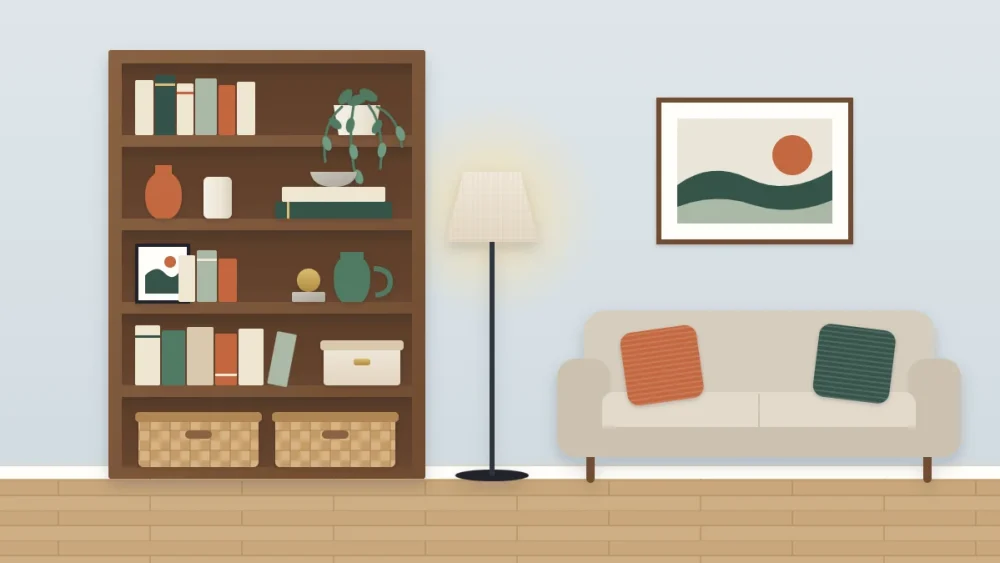
In most homes the living room bookshelf is the largest thing on its wall, and the one piece everybody faces for hours at a time. That makes it less of a display case and more of a backdrop: it has to sit comfortably with the sofa, the rug, the screen and the people using the room.
So the useful question is not “what looks good on a shelf?” but “what is this bookcase doing to the room?” The problems below are the ones that come up most often, each with a fix you can try with what you already own.
Problem: the bookcase looks like it belongs to another room
Fix: borrow two colors the room already has. Look at the cushions, the rug and the largest piece of art, and pick the two colors that appear most clearly. Then repeat each one on the shelves at least three times, in different sizes: a terracotta pot, a rust-colored box, a run of warm spines; a deep green vase, a green bowl, a plant.
Spread those repeats across the unit so the eye moves between sofa and shelves and finds the same notes in both. Keep everything else on the shelves quiet: cream, wood, black, natural fiber. If you want a fuller method for choosing and testing the colors, follow the steps for choosing a bookshelf color palette.
Problem: it looks fine up close but messy from the sofa
Fix: style for the seat, not for standing. Sit where you usually sit and look at the unit. The two or three shelves that fall at eye level from there are the ones you see every evening, and they deserve most of your effort.
- Eye-level shelves: your best objects, your calmest book spines and the most open space. One group of books and one or two pieces per shelf is enough.
- Upper shelves: simpler and lighter. A row of books, a single larger vase or basket, little that needs dusting.
- Lowest shelves: practical. Larger books, baskets and closed boxes.
Small objects that are charming in the hand disappear from across a room. Replace a scatter of them with one larger piece per shelf, and browse the collection of bookshelf styling ideas to try for arrangements that hold up at a distance.
Problem: the wall feels lopsided
Fix: balance the bookcase against its neighbors. A tall, full bookcase is visually heavy. Beside a low sofa it can make one end of the wall look loaded and the other bare.
Give the lighter end something with height: a floor lamp, a tall plant or a framed piece hung above the sofa at roughly the level of the unit’s upper shelves. On the bookcase itself, keep the shelves nearest the sofa a little more open, so the step down from unit to seating is gradual.
Next to a window, do the reverse. Glass is bright and empty, so let the shelves closest to it carry paler objects and more open space, and place darker books and larger pieces on the far side. A trailing plant near the window edge softens the join; the guide to plants on bookshelves covers which spots suit them. Stand every pot in a saucer or cachepot so water never reaches the books.
Problem: the shelves compete with the television
Fix: keep the area around the screen quiet. A screen is a large dark rectangle, and when it is on, it is the brightest thing in the room. Anything busy beside it pulls at the edge of your vision.
- On the shelves closest to the screen, use low contrast: books in similar tones, matte ceramics, nothing shiny that will reflect the picture.
- Avoid strong patterns, bright accents and framed glass at screen height.
- Move your accent colors and most interesting objects to the shelves farthest from the screen, where they can be enjoyed when it is off.
- Echo the black of the screen once or twice elsewhere on the unit, with a dark box or a few dark spines, so it looks like part of the scheme.
Problem: remotes, chargers and games take over
Fix: give them lidded boxes at hand height. Living room clutter is small, dark and tangled, and it settles in whatever gap is nearest the sofa. Two or three lidded boxes or baskets on a shelf you can reach from a seat will take remotes, cables, controllers and card games.
Choose a matching set in one of your quiet base colors, and give each container a single job.
Problem: the corner is dark in the evening
Fix: add a lamp on or near the unit. A bookcase lit only from the ceiling goes flat at night. A small table lamp on a shelf at about shoulder height, or a floor lamp beside the unit, brings out the shapes and makes the wall feel warm.
Good to know
Use a plug-in or rechargeable lamp, keep its shade clear of books and the shelf above, and run the cord where nobody will catch it. Lighting that is wired into the unit or the wall is a job for a licensed electrician.
Problem: nobody can find the book they are reading
Fix: let the room’s real habits set the layout. This is a shared room, and a bookcase that only looks good will be undone within days.
- Keep the books people actually read between knee and shoulder height, on the side of the unit nearest the seating.
- Give each person, or each kind of book, its own stretch of shelf so things go back to the same place.
- Reserve one short gap for the current read, so it has somewhere to land that is not the top of a styled stack.
- Put children’s books and games in the lowest baskets, where small hands can reach them without moving anything fragile.
Leave the room a place to put a cup down, too. If the bookcase stands beside a seat and every shelf is fully dressed, drinks end up balanced on books. Keep a clear stretch at arm height on the nearest shelf, with a tray to mark it, or place a small side table between seat and unit.
When the unit covers the whole wall
All of these fixes still apply to a wall-wide or floor-to-ceiling unit, but the number of shelves brings its own challenge. Plan it in bands and passes, as described in the guide to styling a large bookshelf without it looking busy, and then come back to the view from the sofa for the final adjustments.
Frequently asked questions
How do you match a bookshelf to living room decor?
Choose two colors already present in the room, such as those in the cushions, rug or artwork, and repeat each at least three times across the shelves in objects and book spines. Keep the remaining pieces neutral so the repeated colors are easy to see.
What should go on shelves next to a television?
Keep them calm and low in contrast: books in similar tones, matte ceramics and closed boxes. Avoid shiny surfaces, framed glass and bright accents at screen height, since they reflect the picture or distract from it. Save your most eye-catching pieces for shelves farther away.
Which shelves matter most in a living room bookcase?
The ones at eye level when you are seated, because that is where the room is mostly viewed from. Give those shelves your best pieces and the most open space, keep upper shelves simple, and use the lowest shelves for baskets, boxes and larger books.