15 Bookshelf Styling Ideas to Try on Any Shelf
Fifteen quick, original bookshelf styling ideas grouped by effect, from stacks used as pedestals to one nearly empty cubby, each with the reason it works.
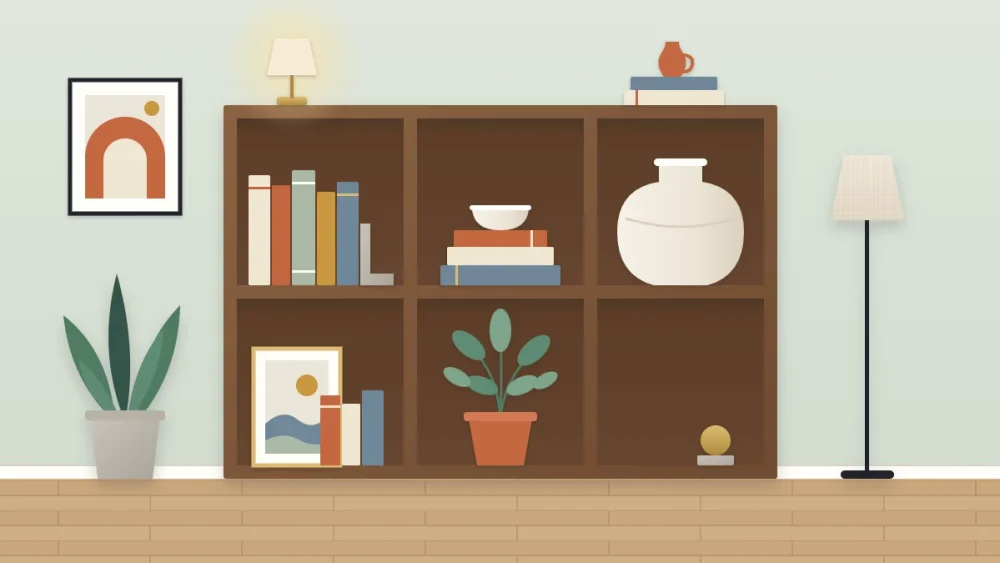
Sometimes a bookcase does not need a full restyle. It needs one good move: a stack where there was a row, a gap where there was a crowd. The fifteen bookshelf styling ideas below are small enough to try in a few minutes each, using shelves and things you already own.
They are grouped by what they do for a shelf, so you can go straight to the effect you are missing. Pick two or three, not all fifteen. If you would prefer to start from an empty unit and work in order, follow the step-by-step bookshelf styling method instead.
Ideas that use your books
1. Alternate upright and stacked
Stand most books upright, then lay a few flat on the same shelf. The change of direction breaks the long line of spines and gives the eye somewhere to pause. Put the stack on the opposite side on the shelf below so the pattern travels down the unit.
2. Use a stack as a pedestal
A flat stack of three or four books makes a small stage. Set a bowl, a little plant or a single object on top and it gains height and importance it would not have on the bare shelf. The guide to stacking books horizontally covers how tall and how tidy a stack should be.
3. Group one block of color
Pull together every book with a blue spine, or a green or cream one, and stand them side by side on one shelf. A single color block looks deliberate and calms a shelf of mixed spines without sorting the whole collection.
4. Turn a few covers to face out
Choose a book with a plain, handsome cover and stand it facing the room, propped against a short row. It works as a small panel of color, much as a framed print would, and it takes up very little depth.
Ideas that use objects
5. Give each shelf one large piece
One generous vase or basket does more than six small ornaments. A large object gives the shelf a clear focus and makes the things around it look like company, not clutter. Keep it to one per shelf so the big pieces do not compete.
6. Pair things that are not identical
Two matching vases side by side can look stiff. Two that share a color or material but differ in height look related and relaxed. Stand them close enough to read as a pair, with the taller one slightly behind.
7. Gather small things on a tray
Tiny objects scattered along a shelf look like things put down in passing. Placed together on a small tray or a shallow dish, they become one item with a clear edge. It also makes dusting far quicker.
8. Hide the unlovely in a lidded box
Every bookcase collects chargers, remotes and loose papers. A lidded box or a lined basket keeps them on the shelf but out of sight, and adds a solid, simple shape. For more on which pieces earn their place, see the guide to choosing bookshelf decor objects.
Ideas that add depth
9. Lean a frame behind a row
Rest a framed print against the back of the shelf and stand a short row of low books in front of it, so the top half of the frame shows above them. The shelf suddenly has a background, and the back panel stops looking like blank space.
10. Overlap two objects
Let a small bowl sit just in front of a taller jug so one edge hides part of the other. Objects lined up with equal gaps look like a display for sale; a slight overlap makes them look as if they belong together.
Ideas that add air
11. Leave one cubby nearly empty
In a unit with many openings, give one of them a single object and nothing else. That quiet spot makes the fuller shelves around it look intentional. Choose a cubby near eye level, where the pause is easiest to notice.
12. End a row early
Stop a row of books about two-thirds of the way along and leave the remainder open, or with one low object. A row that runs wall to wall looks packed; a row that ends looks placed. The reasons are explained in the guide to negative space on shelves.
Ideas that add life
13. Let one plant trail
A single trailing plant on an upper shelf softens every hard edge beneath it. Keep it to one or two plants per unit, and stand each pot in a saucer or a cachepot so water never reaches the books.
14. Put a branch in a vase
A few bare or leafy branches in a tall vase add height and a loose, irregular line that nothing else on a bookcase has. They need an opening with room above, so use the tallest shelf or the top of the unit.
15. Add one seasonal touch
Swap a single item as the year turns: a bowl of pine cones in winter, a jug of spring stems, a few shells in summer. One change is enough to make the whole bookcase feel current, and it takes a minute to undo.
How to choose which ideas to try
Stand across the room and name the problem in one word before you pick anything:
- Flat: try the depth ideas, 9 and 10.
- Crowded: try 7, 8, 11 and 12.
- Monotonous: try 1, 2 and 5.
- Stiff: try 6, 13 and 14.
- Busy with color: try 3.
Tip
Try one idea, then look at the whole unit before adding the next. Each change shifts how the other shelves look, and two well-chosen moves usually do more than six.
Frequently asked questions
What is the easiest bookshelf styling idea to start with?
Lay a few books flat on a shelf that currently holds only upright ones, then set one small object on top. It takes a minute, uses nothing new, and immediately breaks up the long line of spines. Repeat it on the opposite side of the shelf below.
How many styling ideas should I use on one bookcase?
Two or three is usually plenty. Each idea adds a point of interest, and too many of them compete with each other. Choose the ones that answer your shelf's main problem, such as looking flat or crowded, then stop and look from across the room.
Can I style a bookshelf without buying anything?
Yes. Most of these ideas only rearrange what is already there: turning books flat, grouping a color, ending a row early or clearing one cubby. For objects, look around your home first. A bowl from the kitchen or a jug from a cupboard often suits a shelf well.